
Hoboken Criminal History Checks
Start with the event, not a guess about where it ended up. Determine whether a Hoboken officer, Brantley County deputy, or Georgia State Patrol trooper handled it. Ask the creating agency for its report. If an arrest led to county intake, contact the Brantley sheriff or jail for the booking. Use the municipal clerk for a city citation and the Superior Court clerk for a filed felony.
Follow a short, documented search chain:
- Record the event date, location, agency, incident or citation number, and the exact record sought.
- Confirm the current Hoboken police or municipal records custodian through city government.
- Ask the current municipal clerk about a local citation, hearing, status, and copy process.
- Move to the county jail and Brantley Superior Court when booking or felony filing followed.
- Use official state or subject-only federal history channels only for the scope they describe.
Hoboken Has No Published Portal
Official-source research found no reliable Hoboken city domain with a police records page, request form, case lookup, fee schedule, or city app. That gap should not be filled with an unofficial people-search service. Search results also tend to favor Hoboken, New Jersey, which can send a Georgia requester to the wrong jurisdiction.
Use direct municipal contact and ask who currently serves as custodian. State that Hoboken, Georgia in Brantley County is the jurisdiction. Supply the incident or citation number if known, plus the date, time, location, parties, record type, desired format, certification need, and cost limit. Ask for written timing and cost terms if the file cannot be produced at once.
Keep a copy of the request and the response. If the city redirects it, note the named office and send the same narrow description there. This creates a useful trail when a report and a citation moved through different custodians. It also prevents repeated broad searches that cannot distinguish a city incident from a county or state event.
Records at the Hoboken Police Department
A Hoboken city report belongs with the municipal law-enforcement custodian if an active city department produced it. It may document the officer's observations, probable cause, place, time, people involved, and initial charge. It does not prove what prosecutors later filed. Research did not verify a dedicated city records unit address, phone, or hours, so those details must be confirmed before sending personal material or traveling.
Request an existing report instead of asking the custodian to answer open-ended questions. If the city says another agency handled the event, note that response and redirect the request. A Brantley deputy's report stays with the sheriff, while a trooper-created report stays with Georgia State Patrol.
Confirm the Hoboken Custodian
The fastest practical question is simple: who holds police and municipal court records now? Ask current Hoboken municipal staff to identify the police-record custodian and the clerk responsible for city citations. Confirm a mailing or delivery address, accepted request method, current hours, and whether a copy can be sent electronically.
No published form means the requester should create a clear written inventory. Include contact details, event date and location, incident or citation number, record type, format, certification, and cost authorization. For a denial, ask for the precise Georgia Code subsection and for all public portions that can be separated from exempt material.
Booking and Arrest Records in Hoboken
A Hoboken stop can generate records in more than one place. If a city officer arrests someone and the Brantley County Jail performs intake, the city holds the narrative while the county holds booking and custody data. Requesting only one misses part of the event. Booking fields may include the intake time, arresting agency, listed charge, bond, custody status, and release information.
No stable official county roster was found during research. Use the Brantley sheriff's official jail-information route or call for the current method. An intake charge can later be amended, dismissed, or never filed, so follow the matter into the correct court before drawing a conclusion.
Georgia 82 Changes the Records Route
Georgia 82 links Hoboken eastward with Nahunta and westward toward Waycross. The road itself does not identify the arresting agency or the court. A municipal officer, county deputy, or state trooper may create the report, and the type of charge determines whether the matter stays local or enters a county court.
Ask for the agency shown on the citation, warning, bond paper, or booking entry. If none is available, give municipal staff and the sheriff a tight date, time, and location. This route-first method is more reliable than assuming every incident near a Hoboken postal address produced a Hoboken police file.
The Hoboken Municipal Court File
A city citation or ordinance matter should be checked with the current municipal clerk. Research found no verified public docket portal, current fee schedule, or published lookup procedure. Ask whether the search can use a citation number, case number, defendant name, lawful date-of-birth detail, or hearing date. Confirm status and the method for a plain or certified copy.
| Court Name | Hoboken municipal court function; verify its current formal name and clerk through city government. |
|---|---|
| Case Types Heard | City citations, ordinance matters, and qualifying local traffic cases. |
| Case Lookup Channel | Direct municipal clerk contact; no official public portal was verified. |
| What the Docket Shows | Citation or charge, hearing date, status, plea or adjudication, and local orders. |
| Copies & Fees | Confirm current availability, certification, delivery, and cost with the clerk. |
Municipal Citation or Superior Felony
The filed charge controls the court route. A city ordinance or qualifying traffic matter may remain with the municipal function. A felony moves to Brantley Superior Court after prosecutors file an accusation or indictment. Magistrate Court may also create a warrant or preliminary record before the felony case develops.
Georgia Courts E-Access lists Brantley Superior and sends users to a provider that requires an account. The clerk remains the authority when an online index has no result. Contact the Clerk of Superior Court at 234 Brantley Street, Nahunta, Georgia 31553, or 912-462-5635, with a case number, name, and rough year. Ask whether the file is electronic, paper, archived, restricted, or sealed.
How Hoboken Records Reach the County
A city officer creates the initial incident file. A fingerprintable arrest is reported through the required justice channels, while Brantley County Jail creates a separate booking. Prosecutors decide what charge to pursue. The court then creates the docket, orders, outcome, and sentence, and qualifying disposition data can be reported to GCIC.
Record flow: Hoboken Police › Brantley County Courts › Georgia Bureau of Investigation, Georgia Crime Information Center
Timing gaps explain why a recent city report, a booking, and a state history may disagree. A person correcting their own history should obtain the court outcome and contact the office that owns the missing source data. GCIC can associate submitted records, but it cannot create a disposition the local court has not supplied.
Hoboken's Former County-Seat Role
Hoboken was Brantley County's seat before Nahunta took that role in 1923. That history explains older references to Hoboken without making it the present home of county court counters. Current county court and clerk functions are centered in Nahunta. A search of historic material should account for the date of the record and the office structure at that time.
Hoboken is also the second and last incorporated city in Brantley County. Waynesville, Hortense, and other named communities are unincorporated, so a mailing-place name does not automatically point to a city police report or municipal docket. Agency identification remains the key fact.
Hoboken Name Searches Need Context
A name alone is weak evidence, especially when national results are crowded with another state. Add the Georgia city, Brantley County, event year, agency, citation number, case number, and exact birth date when an official system lawfully requests it. Even then, a name-based possible match is not fingerprint confirmation.
Georgia Felon Search is limited to possible Georgia felony-conviction matches and omits misdemeanors, juvenile felony history, and restricted or sealed information. A no-result screen therefore cannot establish that no Hoboken incident, booking, municipal case, out-of-state matter, or federal record exists.
Official Identity and Restriction Channels
For a person's own nationwide FBI record, the official electronic Identity History Summary portal uses fingerprints and identity information.
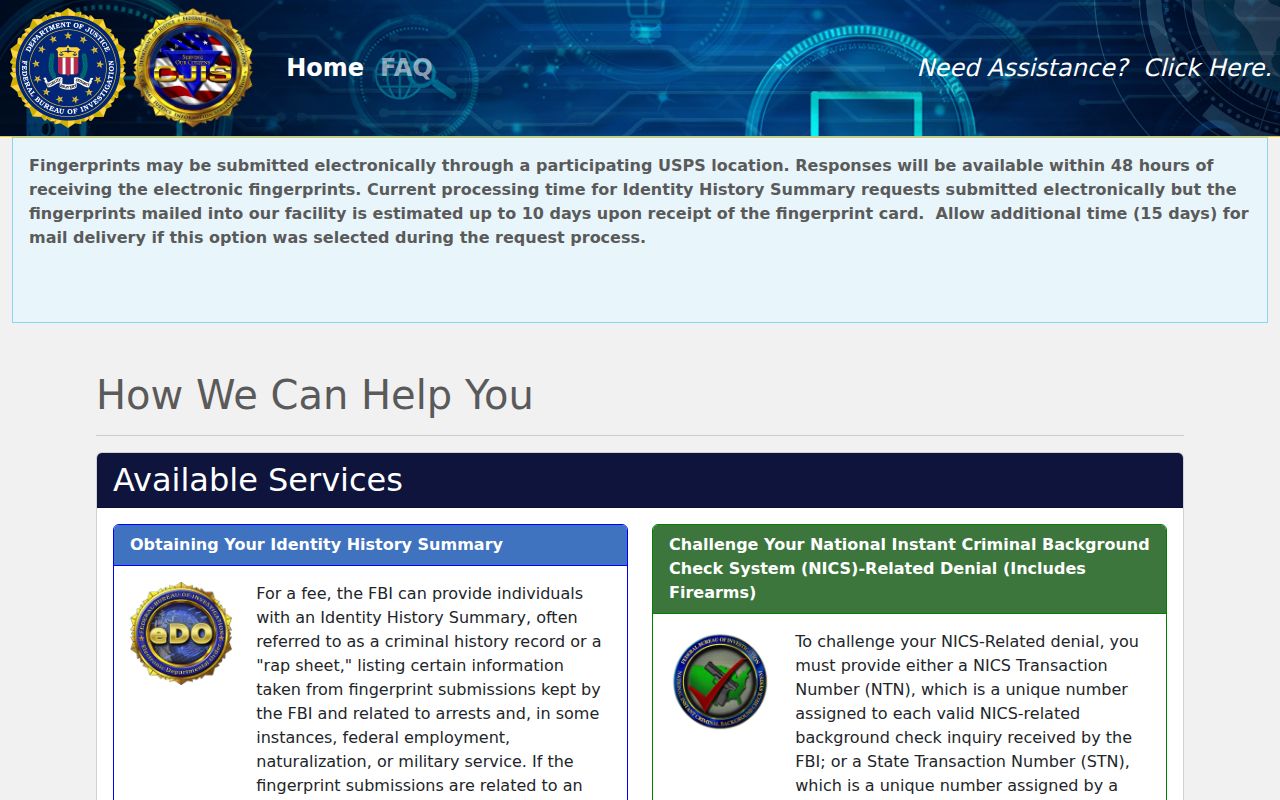
The federal product is subject-only and does not replace a Hoboken report or Brantley court file. Georgia also calls its clearing process record restriction, which limits dissemination rather than destroying the record.
The Georgia record-restriction guide explains routing by arrest date and review steps.
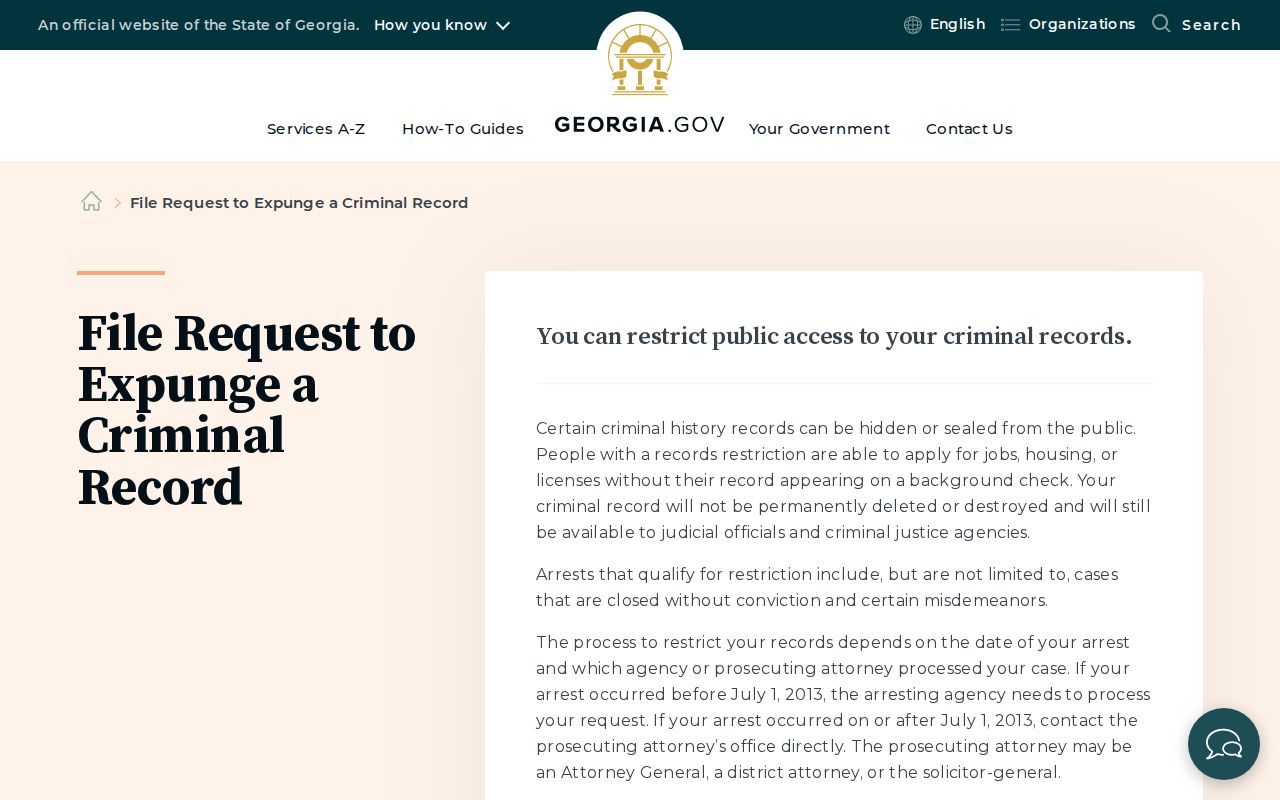
The official state material lets a person compare the local arrest source with the correct restriction path.
The GBI restriction overview provides the agency forms route.
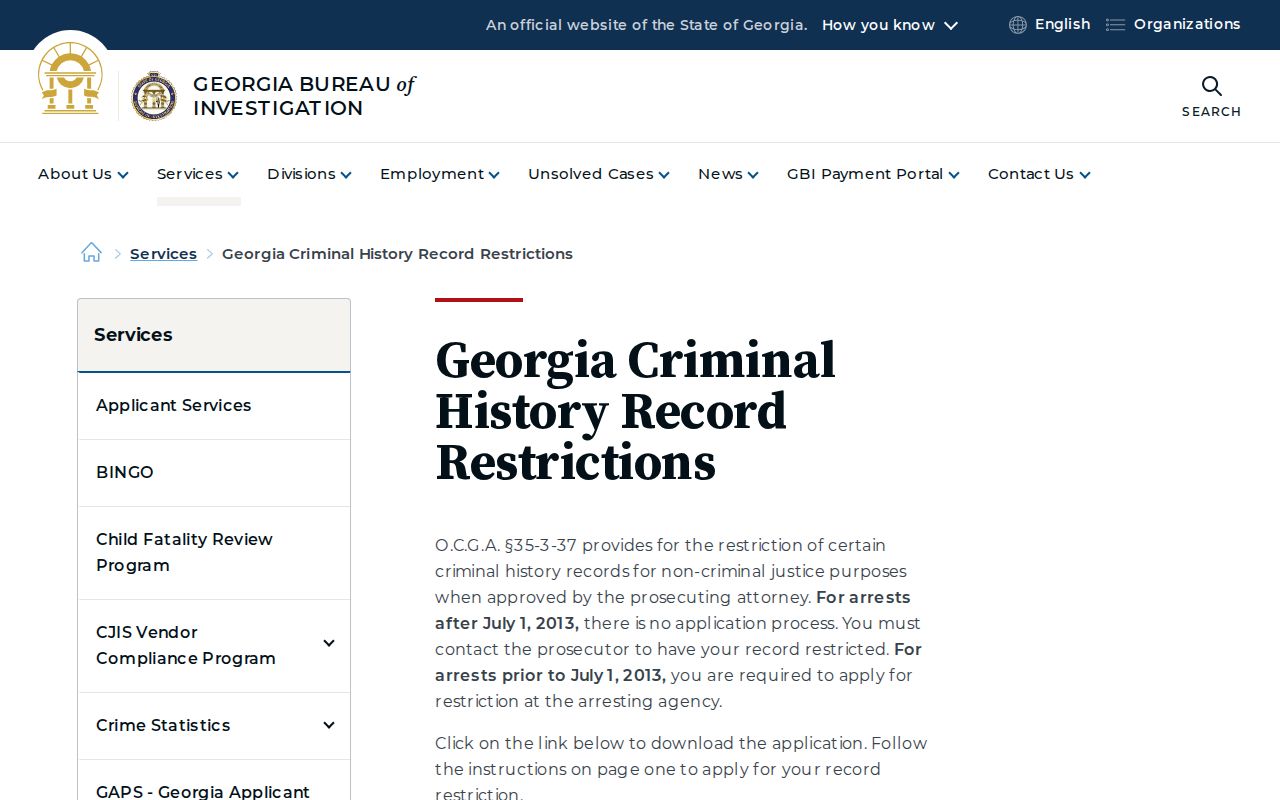
Restriction and court sealing are related but distinct, so verify which record still appears. A pardon also does not automatically erase a history.
The Georgia pardon and restoration explanation describes that difference.
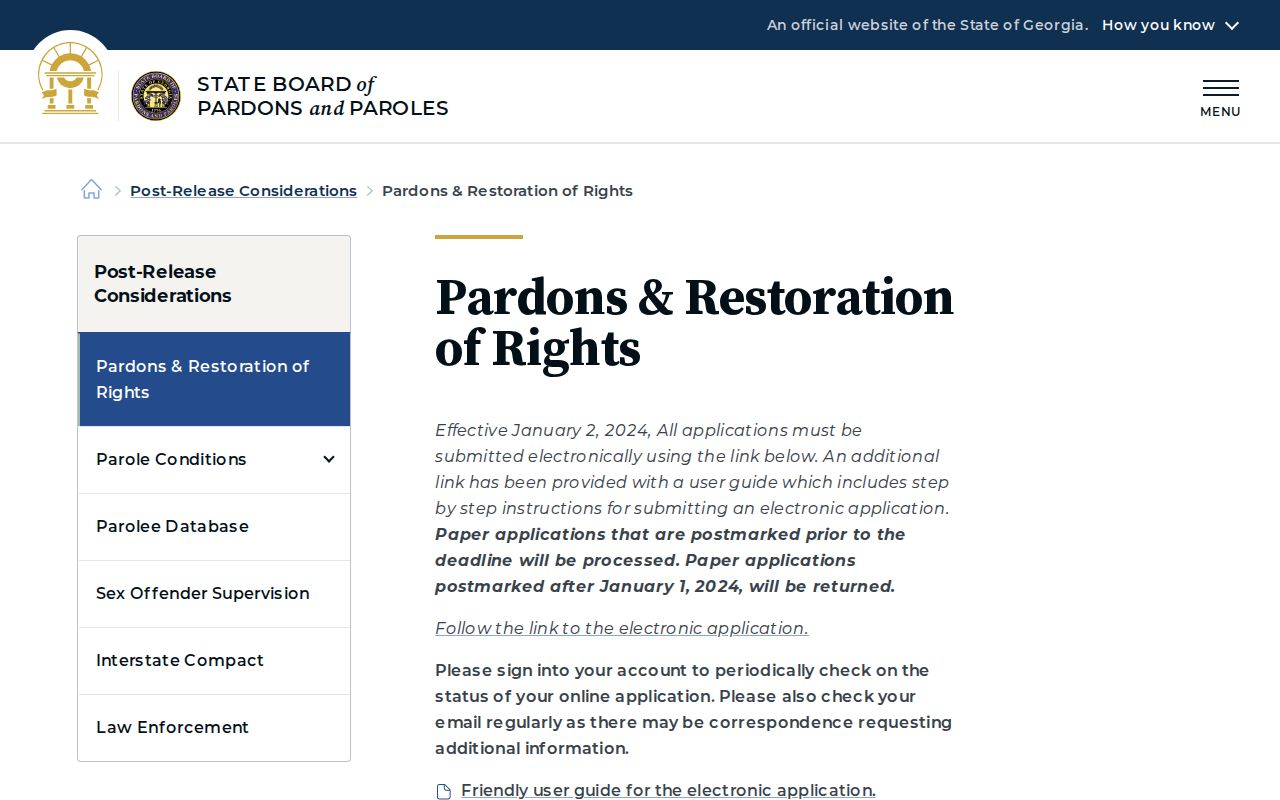
These state and federal channels belong after the local record has been identified, not in place of city and court requests.
Hoboken Record Access Rules
The Georgia Open Records Act presumes access to agency records and generally requires a response within three business days. If production takes longer, the response should address timing, cost, or the legal reason for withholding. Active investigations, juvenile confidentiality, sealed files, restricted history, and protected personal data can limit access. Request the nonexempt remainder when redaction can separate it.
An agency must provide existing public records, not create a new report or answer research questions. Keep the request narrow, identify a date range, and send it to the office that made the file.
Key Statutes:
Georgia Open Records Act, O.C.G.A. §§ 50-18-70 through 50-18-77 - sets the access presumption, response framework, and exemptions.
O.C.G.A. §§ 35-3-34 and 35-3-35 - govern Georgia criminal-history dissemination.
O.C.G.A. § 35-3-37 - governs record restriction and its review route.